Building a brain healthy United Kingdom together

👋 Hi! We are the UK Brain Health Foundation
Brain health is everybody’s business
Brain health underpins how we think, learn, connect, work, create and age. Our brain health is shaped throughout life by our environments, experiences, opportunities and behaviours, and can be strengthened at any age. This creates a powerful opportunity to build a better national approach to brain health, bringing together health, education, employment, research and communities through a shared platform focused on protecting, optimising and sustaining brain health across the lifespan.
“Brain health is the state of brain functioning across cognitive, sensory, social-emotional, behavioural and motor domains, allowing a person to realise their full potential over the life course, irrespective of the presence or absence of disorders.”
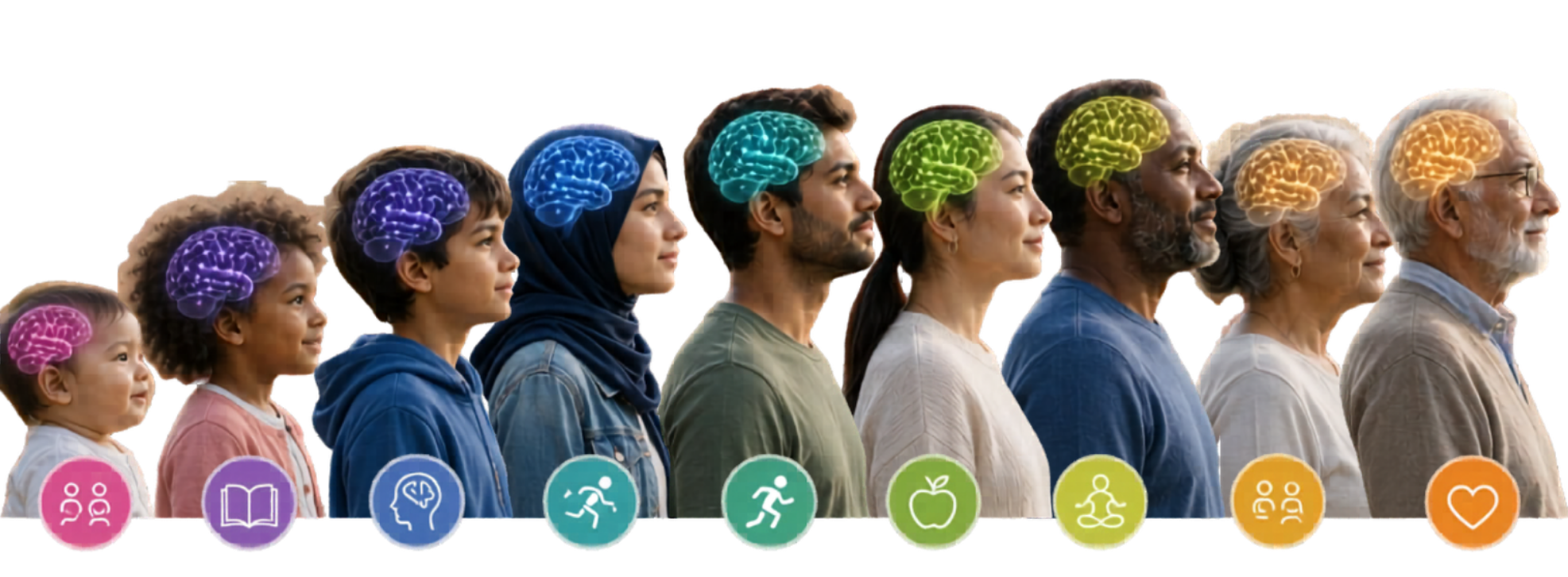
The UK Brain Health Foundation makes brain health a national priority
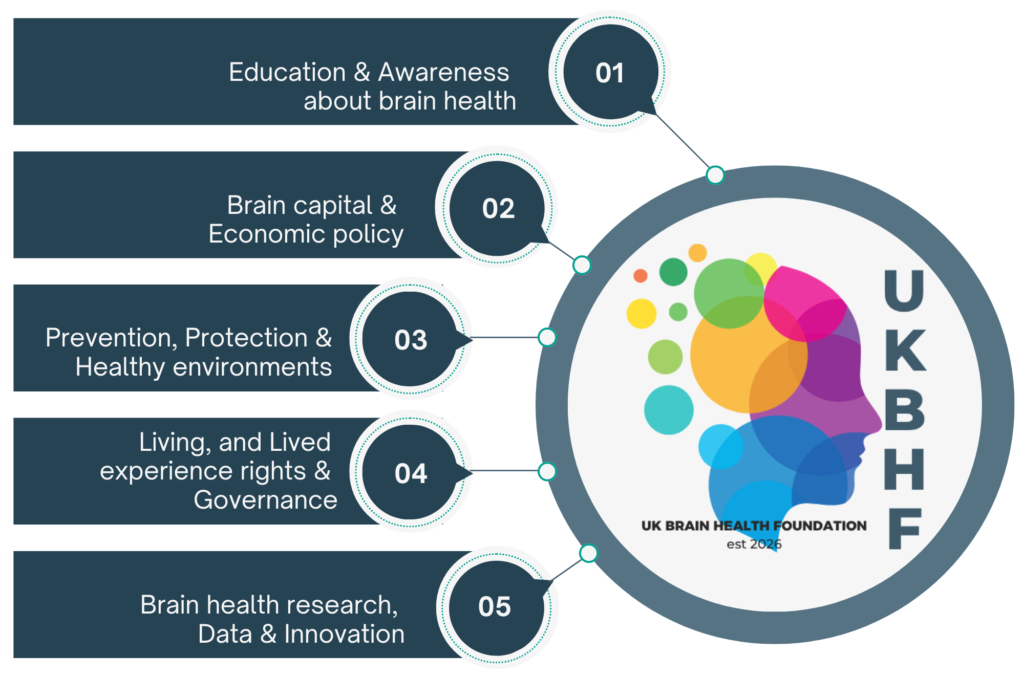
Five Policy Pillars

1. Education & Awareness
In the UK Brain Health is often limited to dementia or ignored entirely until something goes wrong. We work to change that. Our focus is on embedding brain health literacy into statutory training, professional standards, and public communication, from Initial Teacher Training to medical education to workplace policy. The goal is a national brain health narrative that is relevant to everyone, across every stage of life.

2. Brain Capital & Economic Policy
Chronic stress, cognitive overload, untreated symptoms, and exclusion from support cost the UK economy billions. We are building the economic and Treasury case for treating brain health as a productivity and workforce issue, developing a UK Brain Capital Index and connecting brain health to regional growth, healthy longevity, and the national skills agenda.

3. Prevention, Protection & Healthy Environments
The conditions that protect or damage the brain are shaped by where we live, work, and learn. This pillar embeds brain health into prevention policy, urban planning, digital regulation, and community infrastructure, giving people practical means to act on brain health in daily life, not just clinical settings.
4. Living, and Lived Experience Rights & Governance
The people who understand brain health most directly, those living with neurological and mental health conditions, carers, and young people, must form the leadership from the start. This pillar sets the standard for co-production across all our work and focuses policy attention on the gaps that clinical systems consistently fail.

5. Research, Data & Innovation
The UK has exceptional research capacity. What it lacks is alignment. This pillar works to join up UKRI, NIHR, universities, charities, and industry around shared brain health priorities, and to accelerate the journey from research finding to real-world implementation.
Get Involved
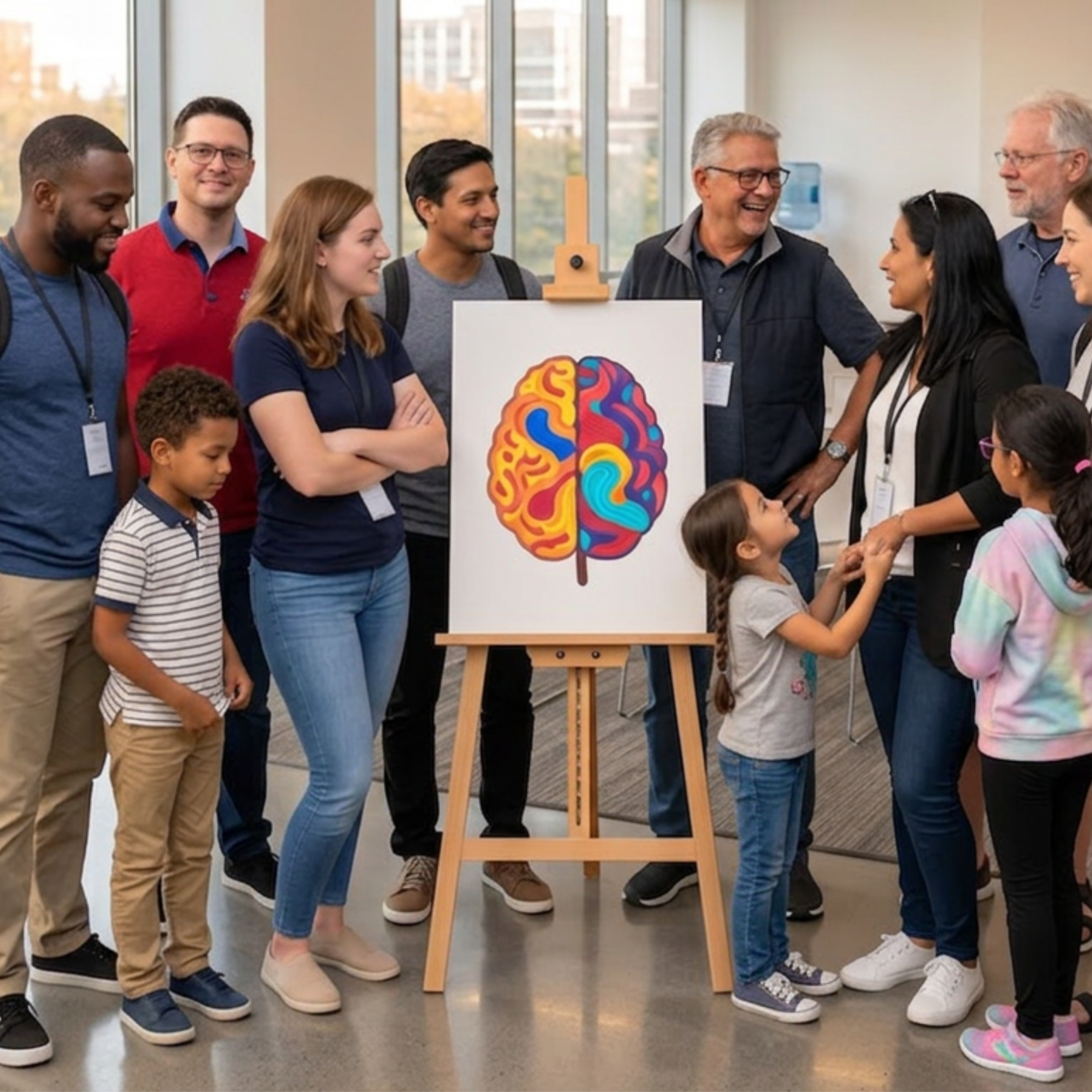
The UKBHF agenda needs a coalition to deliver brain health
UKBHF is a convening platform for the UK Brain Council and Youth Brain Council. Its reach and credibility depend on the breadth and quality of the organisations and individuals that stand behind it.


Supported by:
UK Brain Council
The UKBHF and its convening arm, the UK Brain Council, are established to create a national framework for lifelong brain health in the United Kingdom.
Contributors:
Building the UK Brain Economy – GBEI, McKinsey & Rice University
The brain economy: from brain‑negative to brain‑positive
Dr Harris Eyre, Executive Director Global Brain Economy Initiative, Senior Fellow Rice University and UTMB, Senior Advisor McKinsey Health Institute.
Harris is a physician, neuroscientist, entrepreneur, and strategist. Harris is credited for pioneering the brain economy transition across sectors and industries. He is dedicated to fostering awareness, data, tools, investment, and leadership to drive the transition.
Harris introduced the “brain economy” and “brain capital” frameworks, arguing that the UK, like many countries, currently operates a “brain‑negative” model that erodes brain capital through stress, inequality, under‑investment in mental health and education, and harmful environments. He outlined:
- Brain health encompasses mental, neurological and substance‑use conditions and their prevention and treatment.
- Brain skills as the capabilities needed in modern economies, adaptability, creativity, empathy, social skills, AI and digital literacy, among others.
- Brain capital as an integrated asset that blends brain health and brain skills, framed as “human capital 2.0”.
Global brain capital indices already suggest a downturn in brain capital and emphasised that such metrics can powerfully engage finance ministers and heads of government, not just health ministers. He described the Global Brain Economy Initiative’s work on:
- National and city‑level brain capital analytics.
- Health‑system and city‑level pilots
- Brain‑lens investment vehicles and engagement with non‑health sectors (industry, finance, labour, education).
- A university alliance, with the UK well placed to be a leader.
Harris encouraged the UKBC to adopt a brain‑economy framing and develop a UK brain blueprint that uses brain capital metrics to shape policy and investment across sectors.
Uniting Neurological Organisations – Neurological Alliance
Living with neurological conditions: costs, gaps and unmet needs
Georgina Carr, Neurological Alliance, Chief Executive. With prior leadership at the MS Society improving treatment, care and support, including on European and international MS committees. She brings expertise in neurological policy and EU health advocacy.
Georgina described the experiences of people living with neurological conditions and the policy landscape in England and the wider UK. The Alliance’s 105 members, from large charities such as Parkinson’s UK to small, volunteer‑run organisations, report that people frequently:
- Face a postcode lottery in accessing coordinated, high‑quality care and support.
- Experience unsafe transitions between paediatric and adult services due to commissioning and cultural gaps.
- Receive little or no structured follow‑up after diagnosis and must rely heavily on charities and internet searches for trusted information.
The Economist Intelligence Unit has estimated that neurological conditions cost the UK around £96 billion in 2019 in direct and indirect health and economic costs, roughly equivalent to the defence budget, with up to £30 billion potentially saveable if treatment, care and support were optimised.
The Alliance’s 2024 “My Neuro Survey” (over 8,500 respondents) found that:
- Invisible symptoms such as fatigue, sleep disturbance and movement difficulties are among the most impactful and significantly curtail independence, work and social life.
- Living with a neurological condition costs at least £200 more per week than for those without, due to transport, aids and adaptations, which many cannot afford.
- Over a third of respondents have a co‑existing mental health condition, but many lack someone to talk to and 31% feel mental health services do not meet their needs; some are turned away as “too complex” because of their neurological diagnosis.
- Major service gaps exist in neuropsychiatry (69% of those who need it cannot access it), respite care (66%) and rehabilitation (64%).
- While 70% of respondents would like to participate in research, 62% never have, revealing a substantial engagement gap even among relatively connected populations.
Importantly, the respondents are predominantly White British, underscoring the need to improve diversity and equity in brain‑ and neuro‑related data and policymaking.
Georgina also outlined significant policy developments: the creation of a UK Neuro Forum to advise government on neurological policy, and a new NHS England adult neurology service specification (2025) which, for the first time, sets minimum standards for neurology services, including expectations around integrated mental and physical health.
AI, Productivity & Brain Health – Brain Future Foundation
Jaime De Mora, Brain Future Foundation, CogniGuard, EI University, Microsoft AI Professor & CTO. Jaime is speaking from his work with the Brain Future Foundation and CogniGuard, a non-profit research initiative exploring the long-term implications of artificial intelligence on human cognition. “AI-related cognitive risk as one of the most urgent and least measured threats to brain health at work.”
AI can displace critical thinking
The world has developed strong systems to measure physical performance, such as steps, sleep, and heart rate, but has not yet built equivalent ways to measure cognitive agency, cognitive independence, or cognitive sovereignty. There is early evidence from education and research settings that AI can displace critical thinking, and that moral reasoning and judgment may begin to be offloaded to AI systems when users become overly dependent on them. In this framing, the workplace risk is not simply distraction or overload, but the gradual erosion of the human capacities that underpin judgment, creativity, interpretation, and responsibility.
Two sectors emerged as having particular urgency. In education, there is concern that students may fail to build core capabilities if AI is overused or poorly governed. The second is mental health, where questions are being asked about whether AI may amplify anxiety, depression, or other vulnerabilities among some users. Many people believe they know how to use AI effectively, yet there is very little structured training in how to preserve cognitive independence while using these tools.
The missing dimension in current AI policy thinking
Many companies are focused on short-term productivity and efficiency gains rather than protecting the brain health of their employees, and cognitive protection is not top of mind in enterprise settings. This is concerning for knowledge workers, who are among the heaviest AI users and may already be experiencing a narrowing of work, where they delegate tasks through AI without exercising reflection and meaningful judgment.
AI risk is both a present operational issue and a future policy issue. The current mainstream AI governance debates often focus on fairness, transparency, accountability, and physical safety, but pay less attention to cognitive health, cognitive independence, and the preservation of human judgment. This makes brain health an important missing dimension in current AI policy thinking.
Brain capital: valuing experience across the life course – National Innovation Centre for Ageing
Brain capital and ageing: valuing experience across the life course
Prof. Lynne Corner, National Innovation Centre for Ageing/ NICA COO & Director. Lynne is Professor of Healthy Ageing and Engagement, and the co-founder and Director of – an international citizen organisation, dedicated to harnessing the intelligence and experience of older adults, operating successfully in over 10 countries across Europe, Asia, Australia, US and Canada, involving citizens in co-development and de-risking innovation for healthy longevity.
Lynne highlighted the concept of “brain capital”, the cognitive, emotional and social resources that underpin productivity, wellbeing, creativity and social cohesion. Her work, rooted in the UK Government’s Foresight report on mental capital and wellbeing (2008), emphasises:
- The importance of investing in cognitive and emotional resources (such as resilience, critical thinking, creativity, empathy, emotional intelligence, self‑esteem and confidence) across all stages of life.
- Persistent inequalities from pre‑birth through later life, visible in cities like Newcastle, London or New York, that shape brain health trajectories and opportunities.
- A policy environment that locks most education and skills investment into under 18s, which is misaligned with the reality of a 100‑year life and the need for lifelong learning and brain health support.
VOICE, the citizen platform Lynne founded, mobilises older adults’ brain capital in ten countries across four continents, fostering intergenerational knowledge transfer and demonstrating that older people represent a major democratic, economic and social asset. The National Innovation Centre’s “City of Longevity” framework further shows how urban design (housing, green/blue space, safety, noise, pollution, social infrastructure) can be reshaped to support brain health and reduce risks such as loneliness and cognitive decline.
Lynne underlined that the annual cost of brain disorders in Europe, estimated around €800 billion, dwarfs current investments, and that brain health is highly modifiable: “we simply cannot afford not to do this.”
Brain health: Bridging Psychiatry, Neurology & Population Health – Royal College of Psychiatrists
Dr Killian Welch, Royal College of Psychiatrists – Neuropsychiatry Faculty Consultant neuropsychiatrist. Killian is a specialist in the interface of neurology, psychiatry and addictions. His training uniquely blends imaging research in schizophrenia, cognitive behavioural therapy, motivational interviewing and neuropsychiatry academic leadership. Killian described neuropsychiatry as the bridge between neurology and psychiatry, focusing on conditions where the brain and mind are deeply entwined.
Evidence from neurology clinics shows:
- Around 25% of neurology outpatients meet criteria for major depression and over one‑third for anxiety disorders, and these psychiatric conditions strongly predict pain and disability.
- Multiple mechanisms link neurological and psychiatric conditions, illustrated by traumatic brain injury: pre‑injury vulnerabilities, direct brain network disruption, neuroinflammation, post‑injury epilepsy, psychosocial and occupational loss, and trauma responses.
He outlined several barriers to recognising and treating psychiatric comorbidity in neurological populations:
- Communication and language impairments, and symptom overlap (fatigue, sleep, cognition) that confuse assessment.
- Impaired self‑awareness in some neurological conditions.
- Over‑reliance on simple screening tools and a tendency to dismiss distress as “understandable” rather than treatable (the “understandability fallacy”).
- Service fragmentation, under‑resourcing of neuropsychiatry, and exclusion of neurological patients from general mental health services due to perceived complexity.
Dr Welch argued for adapting psychological therapies such as behavioural activation to neurological populations and embedding mental health expertise across neurology and rehabilitation services.
UK Brain Health Blueprint 2026-2036
The UK Brain Health blueprint, co-produced by the brain health community, sets out a national brain health policy framework for the UK. Its purpose is to address a critical structural gap: despite world-leading neuroscience, clinical expertise, and lived-experience leadership, the UK lacks a coherent national brain health policy that brings health, education, workforce, economic, and social systems into alignment across the life course.

Youth Brain Council
Through the Youth Brain Council the UKBHF recognises that youth experiences and creativity are important in building a healthier future. The YBC brings young people’s ideas into brain health conversations and decision making. Its mission is to make brain health easier to understand, more welcoming, and more useful for children and young people.
What the Youth Brain Council will do
- Connect young people with living and professional experience in brain health globally;
- Share young people’s ideas and experiences with leaders and decision makers;
- Help produce campaigns, videos, activities, and resources for peers;
- Work on brain health advocacy, protection, prevention, online wellbeing, learning, and healthy habits;
- Help improve brain health in schools, colleges, workplaces, and local communities;
- Help create youth-focused brain health policy and outputs from the UKBC.
Why it matters
- Brain health starts being impacted early on in life. Our experiences, relationships, environments, and habits can all affect how our brains grow and stay healthy over time.
- Young people understand the challenges they face today, including stress, stigma, social media pressure, online harms, loneliness, and finding support when they need it.
- They are especially vulnerable to marketing and physiological effects of substances such as alcohol, nicotine products, and recreational drugs, yet they are insufficiently informed of these and further risks to their health.
- Working with young people is essential to advocate for a life-course approach in brain health. Their voices can help create better ideas, better services, and a healthier future for everyone.
Get in touch
For enquiries, media and press please connect with us directly.
All rights reserved.